
Best Smart Water-Leak Detectors
Protect your home from water damage. We compare sensitivity, alerts, battery life, and hub requirements of the best smart water leak sensors.
Editorial Research Standard
Our conclusions are based on relevant manufacturer specifications, product documentation, warranties, and professional guidance. The evidence used varies by guide and is disclosed below.
Learn more in our Editorial Policy.
A single undetected plumbing leak can lead to dry rot, structural degradation, and thousands of dollars in mold remediation costs. A smart water-leak detector is one of the few smart home devices that offers a direct, meaningful financial return on investment.
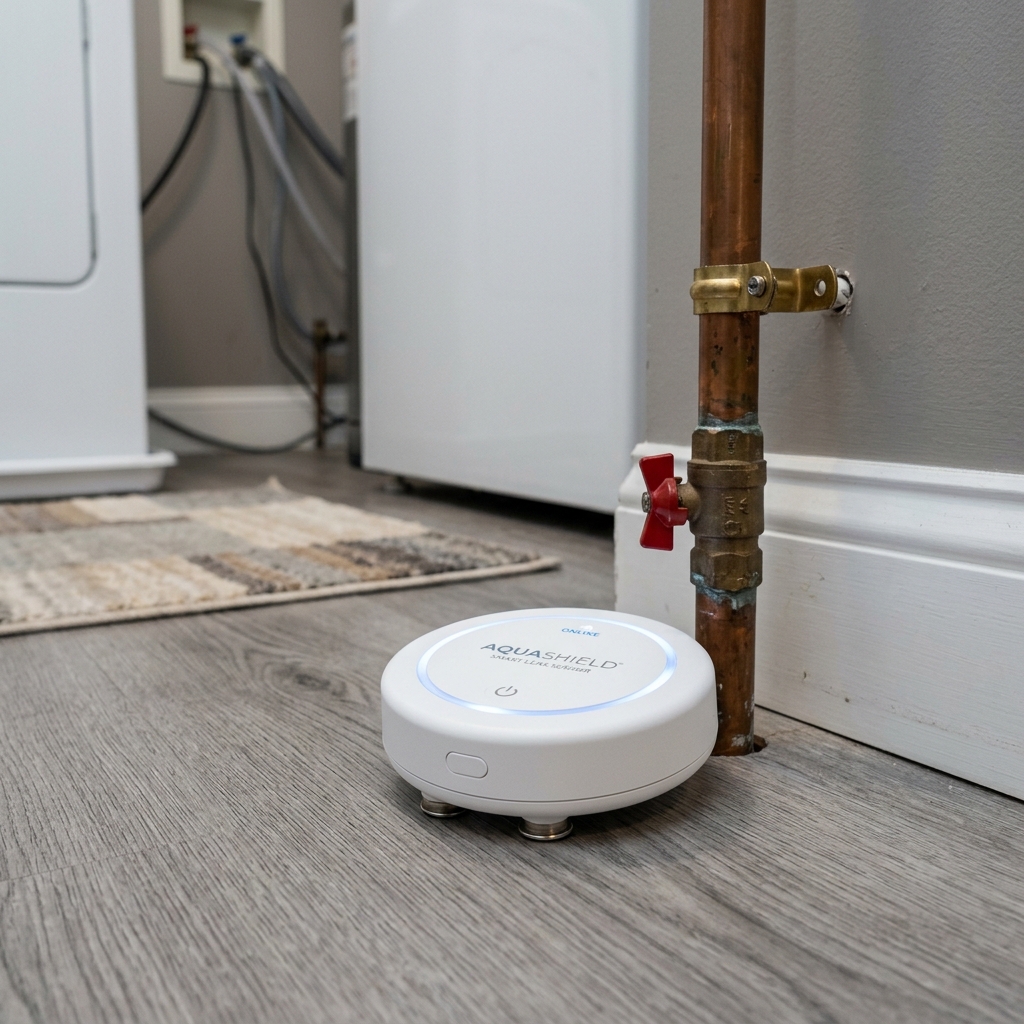
The best smart water leak detector for most homeowners is a Wi-Fi-enabled moisture sensor with an integrated audible alarm, a slim profile to slide under appliances, and a companion app that does not require subscription fees [2].
Our top recommendation is the Moen Flo Smart Water Detector for its integration with automated shut-off systems, while the Govee Wi-Fi Water Sensor is the best budget-friendly multi-pack option.
Leak Detector Comparison Matrix
| Detector Model | Connectivity | Hub Required | Audible Alarm | Sensor Cable Option | Best For | Price Estimate |
|---|---|---|---|---|---|---|
| Moen Flo 920-004 | Wi-Fi | No | Yes (85 dB at 10 ft) | Yes (optional) | Premium smart integration | ~$50 |
| Govee H5054 | Wi-Fi + RF | Yes (included in kit) | Yes (100 dB at unit) | No | Budget whole-house coverage | ~$35 (3-pack) |
| Phyn Smart Water Sensor | Wi-Fi | No | Yes (80 dB at 3 ft) | Yes (included) | Critical pump/sump areas | ~$40 |
1. Top Pick: Moen Flo Smart Water Detector (920-004)
Moen is an established plumbing manufacturer. Their leak detector integrates directly with their automated water shut-off valves.
- Who it is for: Homeowners who want a professional-grade leak detection network that can physically turn off the main water line in an emergency.
- Who it is NOT for: Renters or apartment dwellers who cannot modify the primary water main.
- Key Specifications: Wi-Fi connectivity, CR123A battery providing up to 3 years of life under typical conditions, temperature and humidity sensors, and 85 dB audible alarm [2].
- Why it is worth it: In addition to water sensing, it monitors temperature. If your basement drops near freezing, it alerts your phone before pipes freeze and burst.
2. Best Budget Choice: Govee Wi-Fi Water Sensor (H5054)
An affordable multi-pack system that communicates back to a single central plug-in hub.
- Who it is for: Homeowners wanting to monitor multiple areas (under kitchen sinks, laundry rooms, hot water tanks, toilet bases) without spending hundreds of dollars.
- Who it is NOT for: Users who demand local hub integrations (Home Assistant) without cloud reliance.
- Key Specifications: RF connection to gateway hub (included), up to 2-year battery life using AAA batteries, 100 dB audible alarm on the sensor unit.
- Why it is worth it: The sensors feature moisture-sensing contacts on both the top and bottom, meaning they detect water dripping from above or pooling from below.
3. Best for Tight Spaces: Phyn Smart Water Sensor
A low-profile puck design that includes a flexible sensor cable to drop down sump pump pits.
- Who it is for: Homeowners who need to monitor tight crevices, such as under low-profile dishwashers or behind washing machine drums.
- Who it is NOT for: Homeowners with weak 2.4GHz Wi-Fi reception in their basements (requires direct Wi-Fi).
- Key Specifications: Direct Wi-Fi, up to 2-year battery life using AA batteries, 80 dB local alarm, includes 4-foot sensor cable extension.
- Why it is worth it: The included sensor cable acts as an extension, turning the entire length of the cable into a moisture-detecting zone.
Buying Checklist: Smart Water Sensors
- Audible Local Alarms: Do not rely entirely on phone push notifications. If your internet router goes offline, or if your phone is in “Do Not Disturb” mode while you sleep, a loud local alarm (80+ dB) is critical to wake you up.
- Hub Requirements: Direct Wi-Fi sensors are easy to set up but drain batteries quickly. RF or Zigbee sensors communicate with a hub, extending sensor battery life to 3+ years, but require a central plug-in station.
- Sensor Contact Points: Ensure the sensor has metal pins close to the ground. Devices with raised pins require water to pool to a depth of 1/8 inch before triggering, which is already enough to damage hardwood floors.
Authoritative Sources & Citations
- Federal Emergency Management Agency (FEMA): FEMA Protect Your Home From Water Damage Guide (Accessed July 2026) - Guidelines outlining average costs of water leaks and recommended preventative tech.
- Moen Incorporated: Moen Flo Smart Water Detector 920-004 Product Page (Accessed July 2026) - Technical specifications for battery life (CR123A), 85 dB alarm, and operation limits.
- Govee: Govee H5054 Wi-Fi Water Leak Detector Product Page (Accessed July 2026) - Technical specifications for 100 dB alarm level, gateway hub requirement, and sensor cable length.
- Phyn: Phyn Smart Water Sensor PHYNSE01-100 Product Page (Accessed July 2026) - Technical specifications for 80 dB alarm, AA battery requirement, and hub-free Wi-Fi operation.
Related DwellNinja Guides
- Explore more smart home upgrades in Smart Home Upgrades That Are Actually Worth It.
- Check our preventative maintenance steps in Complete Monthly and Seasonal Home Maintenance Checklist.
DwellNinja Editorial Team
Objective Homeowner Advice
The DwellNinja Editorial Team researches manufacturer documentation, product specifications, warranties, and professional guidance to produce practical homeowner guides.
Become a smarter homeowner
Get our twice-monthly homeowner guides and product insights sent directly to you.
Related Guides You Might Like
Smart Home Upgrades That Are Actually Worth It
Cut through the tech hype. We look at smart home devices that offer genuine energy savings, enhanced safety, and everyday convenience.
Smart Thermostats: When They Actually Save Money
Look past the marketing. We analyze utility research and household HVAC habits to explain when smart thermostats deliver real savings and when they do not.