
How to Compare Home Products Without Wasting Money
Avoid buyer's remorse. Learn our simple, research-driven framework to evaluate quality, warranty, and long-term durability before buying home items.
Editorial Research Standard
Our conclusions are based on relevant manufacturer specifications, product documentation, warranties, and professional guidance. The evidence used varies by guide and is disclosed below.
Learn more in our Editorial Policy.
Making smart buying decisions for your home requires look-ahead analysis. Many buyers focus entirely on the initial price tag, only to pay more later in repairs, maintenance, or early replacement.
This guide outlines a repeatable framework to help homeowners evaluate quality, warranties, total cost of ownership, and recurring feedback patterns.
1. Verify Key Specifications
Look past marketing labels to verify exact material configurations. Manufacturers often use terms like “heavy-duty” or “commercial grade” without technical backing. Standard safety and manufacturing guidelines define correct tolerances [1]:
- Metals: Solid forged steel or brass vs. stamped metals or zinc alloys. Stamped metals are prone to bending under torque, while cast zinc alloys can shear off suddenly.
- Plastics: High-density polyethylene (HDPE) or ABS vs. thin polystyrene.
- Fasteners: Threaded brass inserts vs. self-tapping screws driven directly into soft plastic.
Practical Example: Water Shut-Off Valves
A solid brass quarter-turn ball valve typically costs $10–$15 but features a lifespan exceeding 20 years. Conversely, a plastic gate valve costs $5 but often suffers from internal seal degradation within 5 years, risking a catastrophic water leak that could cause thousands of dollars in water damage.
2. Evaluate Warranties as Promises
A manufacturer’s warranty is a statistical promise of a product’s minimum expected trouble-free lifespan [2].
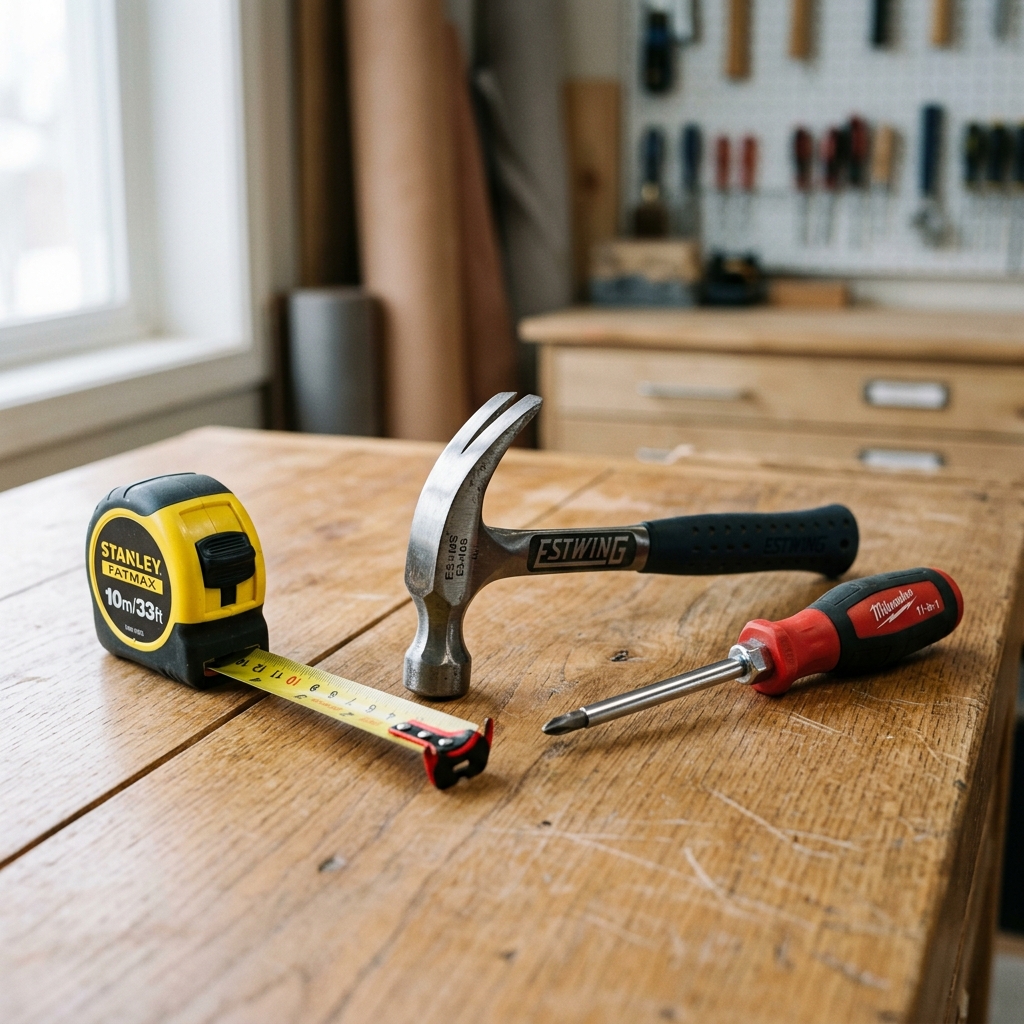
- Lifetime Warranties: Often found on high-quality hand tools (e.g., Estwing, Channellock) or premium plumbing fixtures. The manufacturer expects very few failures and will swap defective units.
- Limited Warranties: Pay attention to what is excluded. Labor costs, shipping, and seals are frequently excluded from warranty coverage, meaning a “10-year warranty” on a water heater might still cost you $500 in plumbing labor to service.
[!NOTE] While a longer warranty suggests manufacturer confidence in durability, it does not guarantee immunity from internal component failures or wear-and-tear exceptions; always check the fine print for exclusion clauses. It is a useful baseline indicator but is not verified as an absolute predictor of product lifespan.
3. Total Cost of Ownership (TCO) Calculation
The true price of an item includes its purchase price plus its operational costs over its useful life, calculated based on standard energy equations [3].
$$\text{TCO} = \text{Purchase Price} + (\text{Annual Operating Cost} \times \text{Useful Life}) + \text{Maintenance Costs}$$
Example: Smart Thermostat vs. Manual Thermostat
Suppose a smart thermostat costs $150 to buy and install. A manual thermostat costs $25. If the smart thermostat reduces heating and cooling costs by $50 annually through scheduling, it pays for its initial difference in: $$\frac{$150 - $25}{$50/\text{year}} = 2.5\text{ years}$$ Over a 10-year useful life, the TCO looks like this:
- Manual Thermostat: $$25 + ($1,200 \times 10) = $12,025$
- Smart Thermostat: $$150 + ($1,150 \times 10) = $11,650$
- Net Homeowner Savings: $375
4. Homeowner Comparison Checklist
Before purchasing any major home tool, appliance, or security device, run through this checklist:
| Check Item | Requirement | Verification Method |
|---|---|---|
| Material Verification | Is it made of durable metals/composites? | Check manufacturer’s parts list and material spec sheets. |
| Standards Compliance | Does it carry safety certifications (UL, ETL, ANSI)? | Look for the certification stamp on the product label. |
| Warranty Review | Are wear-and-tear parts or labor excluded? | Read the PDF copy of the warranty document on the manufacturer’s site [2]. |
| Maintenance Profile | Does it require regular oiling, filter changes, or calibration? | Check the “Maintenance” section of the user manual. |
| Replacement Parts | Are replacement seals, chargers, or cartridges easily available? | Search online retailers or local hardware stores for spare parts availability. |
5. Common Warning Signs of Low Quality
- Excessive Weight Discrepancies: If a tool or appliance is significantly lighter than standard models, it often indicates the replacement of internal metal gears with plastic components.
- Generic Certification Marks: Beware of products listing “CE” (which can stand for “China Export” in some visual styles) without independent laboratory markings like UL, ETL, or CSA.
- Vague Material Claims: Avoid listings that say “steel-reinforced” or “metal-plated” instead of specifying the grade of alloy or plating thickness.
Owner-Feedback Disclosure
Owner-feedback analysis not performed for this comparison framework.
Authoritative Sources & Citations
- [1] American Society of Mechanical Engineers (ASME): ASME B107.100-2020 Flat Wrenches Standard (Accessed July 2026) - Detailed requirements on metal hardness, dimensional tolerances, and safety ratings.
- [2] FTC Consumer Advice on Warranties: Federal Trade Commission - Understanding Warranties (Accessed July 2026) - Guidance on federal rules governing full versus limited consumer warranties.
- [3] DOE Appliance Standards Program: US Department of Energy - Appliance and Equipment Standards (Accessed July 2026) - Energy consumption and operational lifecycle data sets.
DwellNinja Editorial Team
Objective Homeowner Advice
The DwellNinja Editorial Team researches manufacturer documentation, product specifications, warranties, and professional guidance to produce practical homeowner guides.
Become a smarter homeowner
Get our twice-monthly homeowner guides and product insights sent directly to you.
Related Guides You Might Like
12V vs. 18V Cordless Drills
Understand the core trade-offs. We break down the differences in weight, power, battery life, and cost to help you choose between 12V and 18V cordless drills.
Best Basic Tool Kits for New Homeowners
Avoid junk plastic kits. We review and compare pre-assembled hand tool kits to help new homeowners buy a durable, high-utility starter set.